Bed bugs remain a recurring concern in cities across the United States because they can easily travel with people and their belongings. The United States Environmental Protection Agency (EPA) explains that these insects are effective hitchhikers, moving from place to place through backpacks, luggage, clothing, and upholstered items. Schools, colleges, libraries, and shared housing all experience regular movement of people, making education about prevention an important part of maintaining healthy learning environments.
Many educational institutions now include pest awareness in their health and facility management programs. When discussing effective response strategies, schools and community organizations may refer to resources such as Buffalo exterminators bed bug service alongside recommendations from public health agencies to better understand professional inspection, treatment methods, and coordinated management practices. These resources complement, rather than replace, the policies established by individual institutions.

Why Bed Bug Misconceptions Remain Common Among Students and Educators
Misunderstandings about bed bugs continue to influence how people respond when they suspect an infestation. One of the most common myths is that bed bugs only appear in dirty or poorly maintained buildings. Research from The Centers for Disease Control and Prevention (CDC) shows that this is false. Bed bugs seek human blood as their food source and can be found in clean or cluttered environments alike.
Another misconception is that bed bugs spread infectious diseases. Findings from The CDC indicate there is currently no evidence that bed bugs transmit diseases to people. Their bites, however, can cause itchy skin, allergic reactions in some individuals, interrupted sleep, anxiety, and emotional stress. These effects may interfere with students’ concentration and overall well-being, especially if an infestation is left unaddressed.
Students often travel between classrooms, buses, dormitories, apartments, and family homes throughout the year. College students also move belongings during semester breaks, increasing opportunities for bed bugs to spread accidentally through personal items. Without proper education, many people overlook early warning signs or delay reporting because they fear embarrassment.
How Schools and Universities Educate Communities About Pest Prevention
Educational institutions are placing greater emphasis on prevention rather than waiting until infestations become widespread. Awareness programs help students, teachers, maintenance teams, and housing staff understand how bed bugs spread and what actions should be taken if they are discovered.
Guidance published by The National Pest Management Association (NPMA) encourages schools to focus on accurate information while avoiding unnecessary alarm. Training sessions often explain the insect’s appearance, common hiding places, and proper reporting procedures.
Many schools and universities include activities such as:
- Orientation sessions for students moving into campus housing.
- Training programs for custodial, maintenance, and residence hall staff.
- Educational posters and digital guides describing bed bug identification.
- Information for families about preventing bed bugs during travel.
- Clear reporting procedures for suspected sightings.
Libraries, childcare centers, and student lounges may also participate in awareness initiatives because shared furniture and personal belongings occasionally become temporary transport points for bed bugs.
Recognizing Early Signs in Classrooms, Dormitories, and Libraries
Early detection helps reduce the likelihood of larger infestations. Reports from The EPA and educational materials developed by The University of Minnesota Extension explain that identifying problems early often simplifies management efforts.
Students and staff should become familiar with several common indicators instead of relying on bite marks alone.
Common signs include:
- Small reddish-brown insects hiding in cracks, seams, or upholstered furniture.
- Tiny white eggs or pale shed skins.
- Dark spotting caused by insect waste.
- Live insects found near sleeping or resting areas.
- Unexplained bite patterns, although bites alone cannot confirm bed bugs.
Classrooms generally present a lower risk because people do not sleep there overnight. Dormitories, residence halls, student apartments, and temporary campus accommodations are typically more vulnerable because they provide suitable conditions for bed bugs to feed and reproduce.
Libraries also deserve attention. Reading chairs, study areas, and shared seating may occasionally harbor insects that have been transported on coats, bags, or other personal belongings.
The Value of Reporting and Coordinated Response Plans
Prompt reporting plays a critical role in preventing small problems from becoming larger ones. Students sometimes hesitate to report suspected bed bugs because they worry about stigma or blame. Staff members may also assume someone else has already reported the issue.
Experts from The American Academy of Pediatrics recommend establishing clear communication procedures that encourage reporting while protecting privacy. A consistent process allows facilities staff to investigate concerns quickly and determine whether professional inspection is necessary.
Effective response plans commonly include:
- Inspecting affected rooms and nearby areas.
- Confirming the presence of bed bugs before beginning treatment.
- Communicating openly with students, staff, and families.
- Working with qualified pest management professionals when appropriate.
- Monitoring treated areas to ensure the infestation has been eliminated.
These coordinated efforts help institutions respond efficiently while minimizing unnecessary disruption to classes, housing, and campus activities.
Building Better Public Awareness Through Education
Long-term prevention depends on consistent education rather than emergency responses alone. Students who understand how bed bugs spread are more likely to inspect luggage after traveling, avoid bringing infested furniture into shared housing, and report concerns before infestations become widespread. Schools looking for broader strategies to support these efforts can also explore resources on creating safer learning environments through pest management, which discusses how integrated pest management contributes to healthier educational spaces.
Residence advisors, librarians, teachers, custodians, and housing managers all contribute to maintaining awareness. Regular refresher sessions ensure that new students and employees receive accurate information each academic year.
Studies published by The Journal of Integrated Pest Management suggest that integrated pest management programs combining education, routine inspections, monitoring, sanitation, and professional intervention produce more sustainable results than relying solely on pesticide treatments.
Educational campaigns should encourage practical habits, including inspecting secondhand furniture before bringing it indoors, reducing unnecessary clutter around sleeping areas, checking luggage after travel, and following established reporting procedures whenever suspicious evidence is discovered.
Key Lessons for Improving Prevention and Community Awareness
Public understanding remains one of the strongest defenses against bed bug infestations in educational settings. When students, educators, and facilities teams recognize the facts, they are better prepared to respond calmly and effectively.
Reliable guidance from The EPA, The CDC, The National Pest Management Association, and university extension programs provides a strong foundation for school and community education. Combined with clear reporting systems and professional assistance when needed, these efforts help reduce unnecessary concern while supporting timely intervention.
Urban communities continue to become more connected through travel, shared housing, and public spaces. Ongoing education about bed bug prevention equips schools, colleges, and community organizations with the knowledge needed to identify concerns early, coordinate appropriate responses, and create healthier environments for everyone who learns, works, and lives within them.






 When people talk about problem-solving in games, they often point to puzzles or strategy titles. But action RPGs can be just as demanding. Diablo II, released in 2000 and still played today, is a strong example. Beneath its fast combat and dark fantasy setting is a constant stream of small and large problems the player must solve, and even decisions like when to buy D2r items reflect that same cycle of planning, testing, failing, and adapting. The game rarely explains itself fully. Instead, it pushes players to observe, experiment, fail, and adjust. That process mirrors real-world problem-solving more closely than it might seem at first glance.
 The recent commencement exercise held by D’Youville University (DYU) of Buffalo, NY featured an artificially intelligent robot as commencement speaker. Prior to the actual holding of the spring graduation
  Actually, Sophia appeared in Jimmy Fallon’s The Tonight Show to announce its forthcoming engagement as the commencement speaker to deliver a timely social topic related to DYU’s offering of educational and humanitarian
 A nationwide experiment called College in 3 will put summer classes back in trend as it works toward getting college students to attain their degree in 3 years time. The University of Minnesota Rochester (UMR) is the first to launch the College in 3 program because the education institution is relatively young and small. It graduated its first class in 2013, while a total of 617 undergraduates are still working toward the completion of their college education in accordance with the traditional 4-year program.
 According to the Chancellor of UMR, Lori Carrell, the College at 3 program will not only move people forward at a faster pace. It will also put into good use the empty

 Recovery and towing companies respond to many kinds of roadway incident. The most common would include vehicle collisions, vehicle breakdowns, and single-vehicle crashes among others. Towing companies, such as
  Remove Vehicles from the Scene of the Incident
 Appliance Repair is a task for the professionals. And thus don’t risk DIY refrigerator washer, or toaster fixing as it creates issues for you and your house.
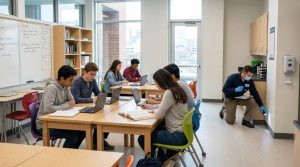 The maintenance team can act on pest infestation through proper measures. Some house triggers may attract pests. It may be some wall cracks, food residues, or pipe leakages. That’s why regular site visits are necessary.
 Changing schools can shake a student’s stability. They’re stepping into new routines, expectations, and social dynamics, often all at once. Some arrive from across town, others across states, or farther. What helps most isn’t a heavy plan, it’s small, human actions from educators: guiding first days, bridging introductions, adjusting workloads, and steady communication with families. Even when plans include best NYC to Boston movers for long-distance relocations, the student’s real journey begins after the boxes are gone, when support systems at school quietly step in to rebuild familiarity and confidence in a place they’re still learning to call their own.
 Reinstatement contracting is essential in restoring spaces to their original condition after a lease or project ends. Whether it’s an office, retail store, or industrial space, these projects require precision, compliance with regulations, and a deep understanding of construction practices. Education plays a critical role in equipping contractors with the knowledge and skills needed to meet these demands effectively.
 With remote teaching on the rise, securing online instruction is crucial. Teachers handle sensitive student information, making strong security measures essential. A Virtual Private Network (VPN) provides secure connections and protects teachers’ work. This article explains how VPNs ensure a
  Many South Korean sports broadcasting platforms go as far as providing overseas sports live broadcast (해외스포츠생중계) and sending real time live streaming to sports fans across the globe. One of the thriving sports broadcasting websites providing quality and up-to-date sports news, real time sports broadcasts, sports analysis and live streaming is Laser TV/
 As it is, providers of


 Outsourcing can provide many benefits for educational institutions looking to improve their performance, and outsourcing “great people” can be particularly valuable. In this article, we will explore how education and outsourcing great people can come together.

 Social media have given people opportunities to become influencers. We should approach the process like a traditional marketing plan: the first step is identifying our target audience. We can only begin to find influencers who are valuable to and trusted by our audience once we understand them.
 Personal style is a way to express yourself through your clothing and accessories. It is a way of expressing your personality and what you like to wear. Personal style can be influenced by many factors, such as gender, age (whether

